

In an era where AI-generated code is accelerating software development cycles to unprecedented speeds, the bottleneck has shifted from creation to verification. Today, Amazon Web Services (AWS) addressed this critical friction point by announcing a major preview release for the AWS DevOps Agent. This update introduces sophisticated release management capabilities designed to act as an "always-available" gatekeeper, ensuring that the velocity of AI-driven development does not come at the cost of production stability.
By integrating "Release Readiness Reviews" and "Autonomous Release Testing," AWS is effectively bridging the gap between rapid code deployment and rigorous engineering standards. This development marks a significant evolution for the AWS DevOps Agent, which has already established itself as a robust tool for post-deployment incident investigation and root-cause analysis.
Main Facts: A New Paradigm for Software Delivery
The AWS DevOps Agent now serves as a comprehensive lifecycle partner, spanning the entire spectrum from initial code creation to production maintenance. The new release management suite addresses the "review queue" crisis—a common scenario where the sheer volume of pull requests (PRs) outpaces human capacity, leading to potential security oversights and operational drift.
Key Capabilities Introduced:
- Release Readiness Reviews: The agent evaluates code changes against predefined, natural-language standards. It performs cross-repository dependency analysis, checks for AWS Well-Architected Framework compliance, and flags potential infrastructure risks before a commit is even merged.
- Autonomous Release Testing: Moving beyond static test suites, the agent dynamically constructs, executes, and evaluates test plans tailored to specific code changes. This includes functional, behavioral, and integration testing within production-like, isolated environments.
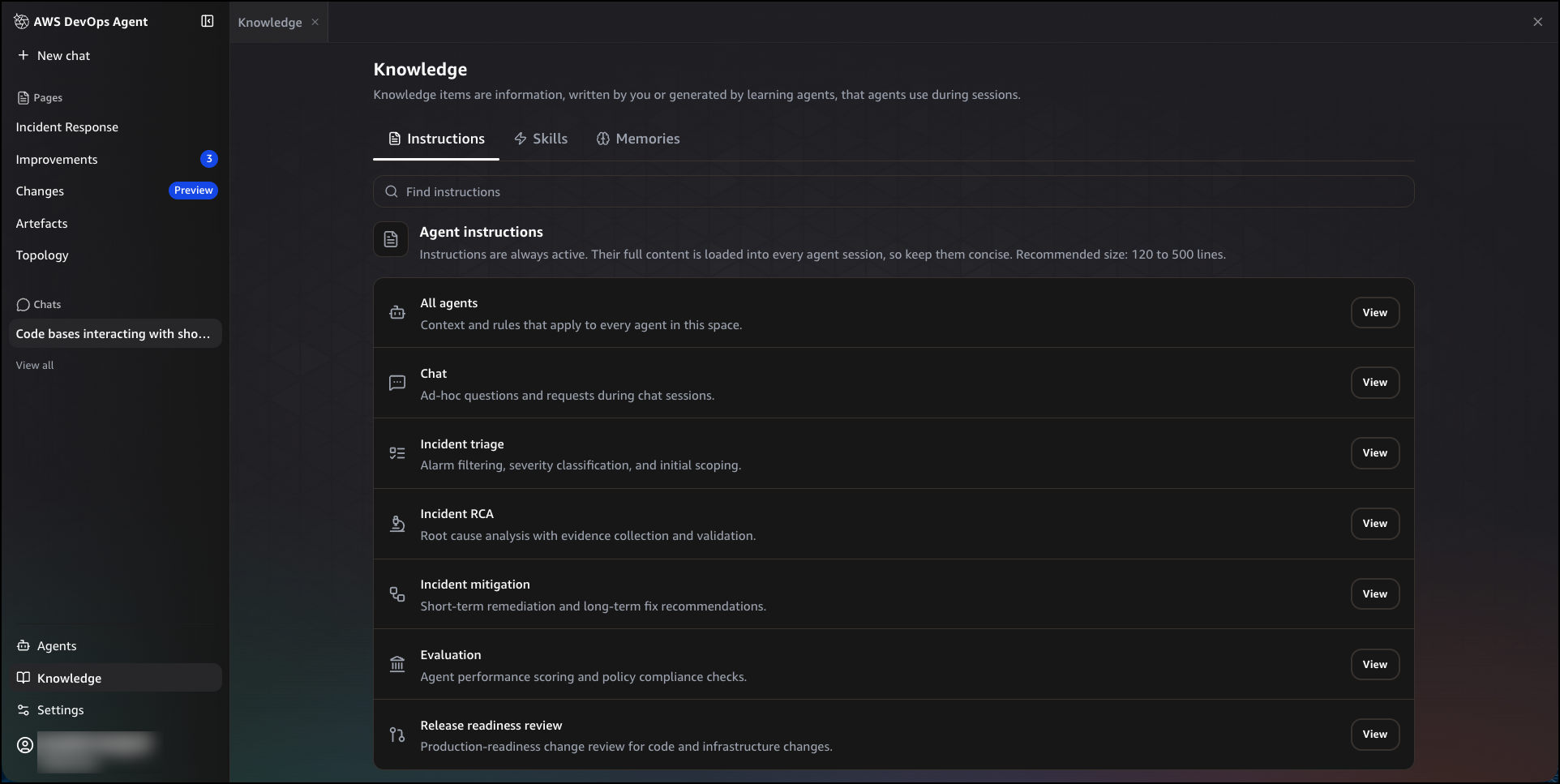
- Natural Language Customization: Organizations can define their internal best practices—such as specific encryption requirements, network access rules, or data classification standards—using plain English. The agent then enforces these rules automatically across all incoming changes.
Chronology: From Incident Response to Proactive Delivery
The trajectory of the AWS DevOps Agent reflects a deliberate shift in cloud operations strategy:
- Initial Launch: The agent debuted as a reactive, intelligent tool focused on post-deployment operations. Its primary value proposition was its ability to autonomously investigate incidents, perform root-cause analysis, and offer mitigation steps to prevent recurring outages.
- Integration Phase: As the tool matured, it gained a "deep understanding" of user environments, mapping services and their dependencies. This foundational knowledge graph enabled the agent to understand not just what a piece of code is, but how it interacts with the broader ecosystem.
- The "Shift-Left" Expansion (Today): With the introduction of release management, the agent has officially moved "left" in the development cycle. By intercepting code at the pull request stage, it prevents vulnerabilities and misconfigurations from ever reaching the production environment.
Supporting Data: Why Autonomous Review is Necessary
The necessity for this tool is driven by current market trends in software engineering. As development teams increasingly adopt AI coding assistants, the number of pull requests has surged. AWS data suggests that human review processes are struggling to keep pace, leading to two primary risks:
- Review Fatigue: When teams are under pressure to keep up with AI-generated volume, manual reviews become superficial. This "rubber stamping" increases the likelihood of critical bugs reaching production.
- Environment Drift: A persistent challenge in DevOps is the gap between local testing environments and actual production infrastructure. Because the AWS DevOps Agent runs tests in production-like, AWS-managed isolated environments, it eliminates the "it works on my machine" phenomenon.
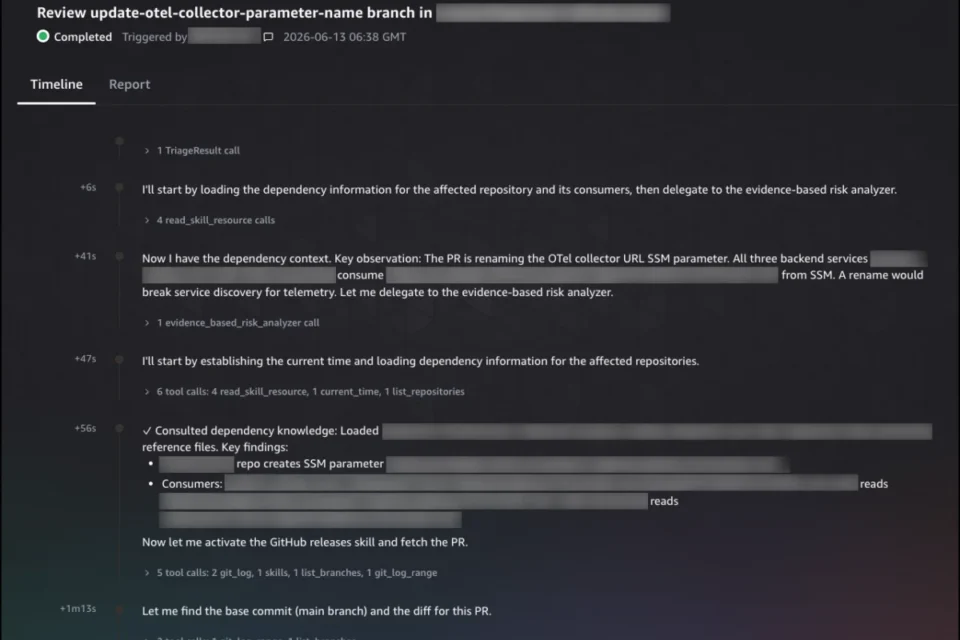
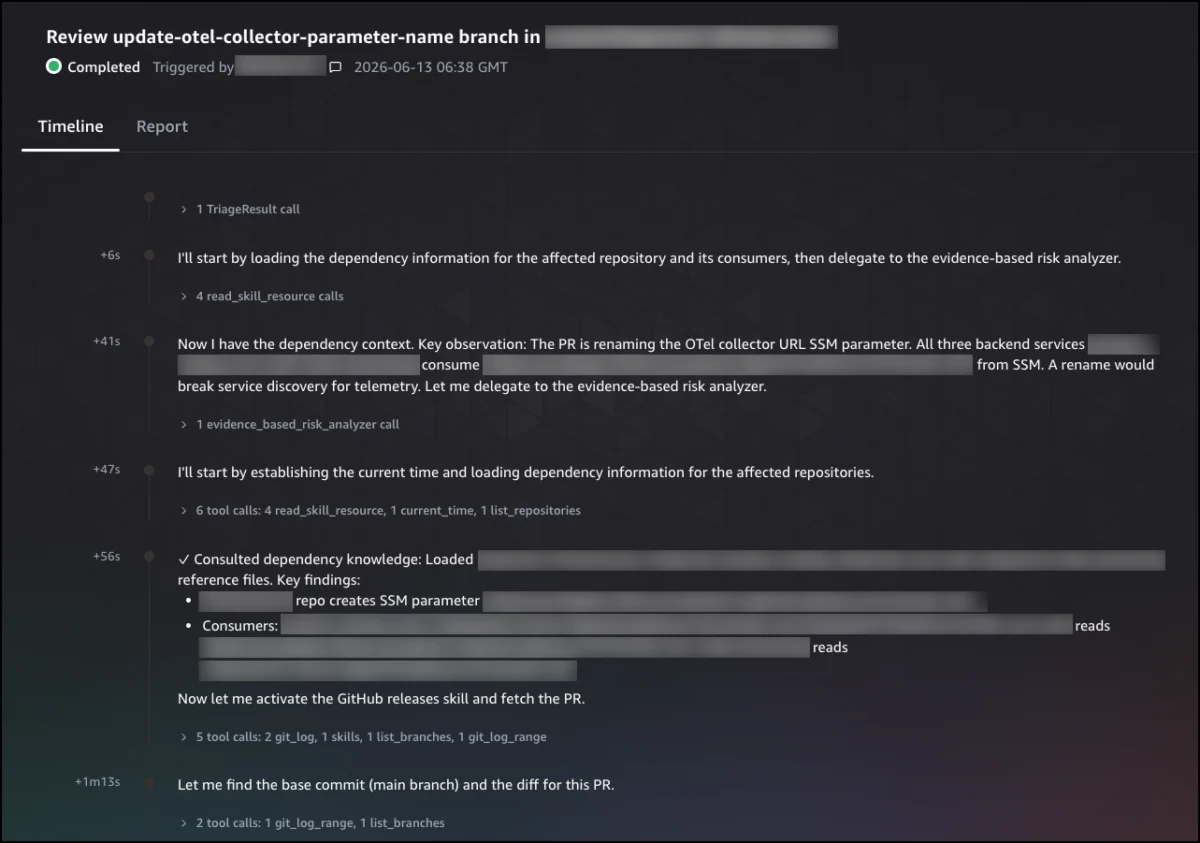
The agent’s ability to provide a "Timeline" view of its reasoning—showing exactly which tools it called and which dependencies it verified—provides an audit trail that human reviewers can trust, effectively acting as an expert force-multiplier for senior engineers.

Implications: The Future of the "Developer Experience"
The implications of this release are profound, particularly for large-scale enterprise environments.
1. Democratizing Security and Compliance
By allowing teams to define "instructions" in plain English, AWS is lowering the barrier for entry to high-level compliance. An organization can mandate that all code must adhere to strict HIPAA or GDPR standards simply by inputting those requirements into the Agent’s instruction set. The agent then acts as an automated auditor, ensuring compliance without requiring every developer to be an expert in every regulation.
2. Efficiency in CI/CD Pipelines
The integration with existing workflows—such as GitHub, GitLab, and IDE plugins like Claude Code—means that developers do not have to leave their preferred environments to receive feedback. By catching errors during the review process, companies can significantly reduce the cost of rework. It is exponentially cheaper to fix a configuration error in a PR than it is to roll back a production deployment at 2:00 AM.
3. Human-AI Collaboration
This tool does not seek to replace the human developer; rather, it aims to elevate the role of the reviewer. By handling the rote verification of dependencies and functional tests, the agent allows human engineers to focus on high-level architecture, business logic, and creative problem-solving. It transforms the reviewer from a "gatekeeper of syntax" to a "validator of outcomes."
Official Perspective and Implementation Guidance
AWS emphasizes that the system is built for adaptability. The agent does not rely on a "one-size-fits-all" approach. Whether a team is working on a simple web service or a complex, distributed API-based application, the agent’s ability to "reason" about the change means it builds a unique testing strategy for every single commit.
How Organizations Can Get Started
For teams looking to adopt this functionality, the process is streamlined:
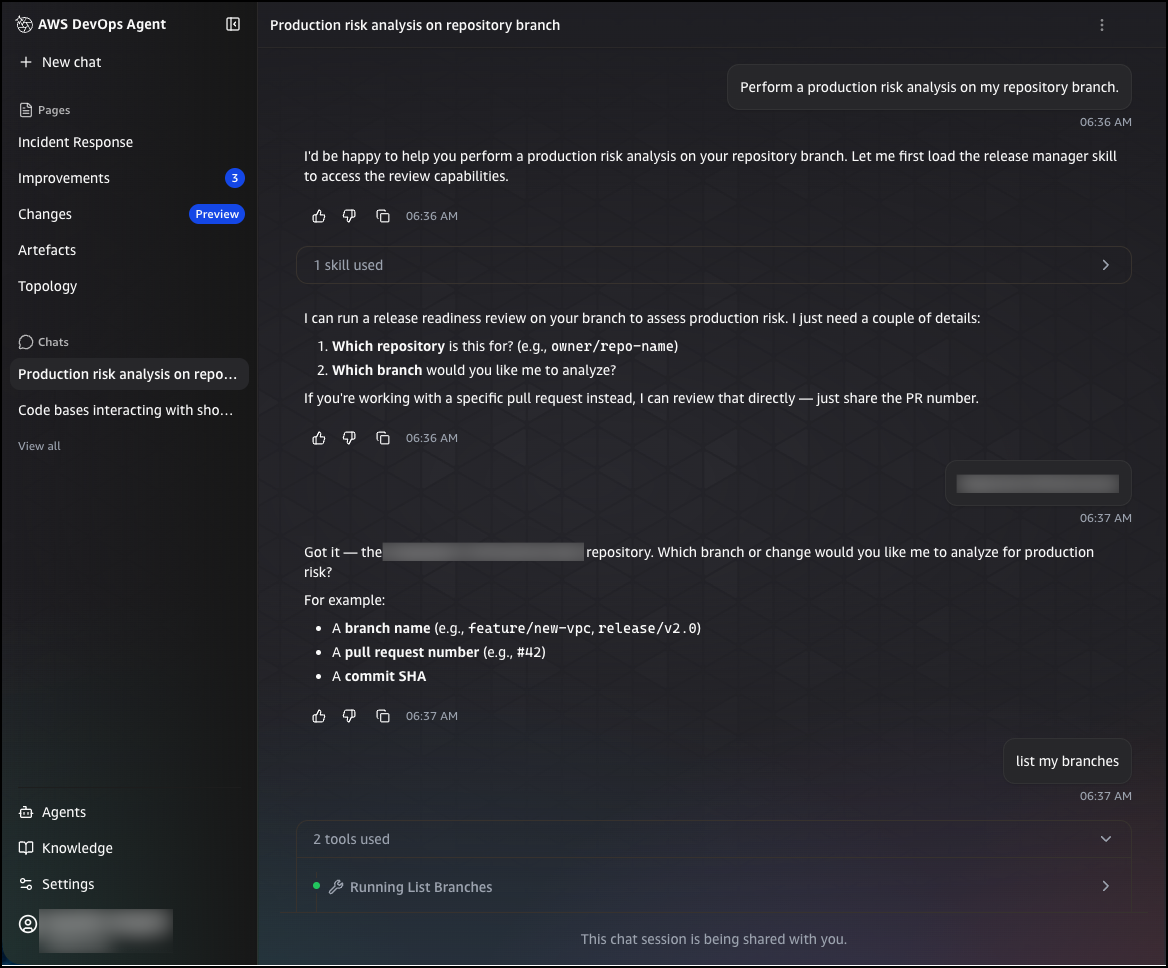
- Connect Repositories: Link your GitHub or GitLab repositories to the Agent Space to allow the agent to index your architecture.
- Define Standards: Use the "Knowledge" tab to input specific organizational requirements.
- Trigger Reviews: Initiate reviews via the AWS DevOps Agent console, through the chat interface using natural language commands, or by submitting a pull request.
- Review the Report: Analyze the final recommendation—which will be categorized as "BLOCK," "Proceed with Caution," or "Safe to Release"—and utilize the specific recommendations to refine the code.
Conclusion: A New Standard for Quality
The introduction of release management to the AWS DevOps Agent is more than just a feature update; it is a recognition that the speed of modern development requires a corresponding speed in verification. By leveraging the same AI models that accelerate code generation to also perform the heavy lifting of security and functional validation, AWS is creating a more resilient, reliable, and efficient software development lifecycle.
As the industry moves toward increasingly autonomous operations, the AWS DevOps Agent stands at the forefront, proving that the future of DevOps is not just about faster delivery, but about smarter, safer, and more consistent software quality.
For those interested in exploring these features, the preview is currently available in the US East (N. Virginia) Region at no additional cost. Further documentation and configuration guides are available through the official AWS DevOps Agent user portal.
